

November 15, 2026
7 min read
Poor data puts more than cleanup time at risk.
In Validity’s 2025 survey, 37% of CRM users reported revenue loss directly linked to poor data quality.
That finding reflects users’ reported experience, not a HubSpot migration failure rate.
The pilot should expose disputes while the scope stays small enough to fix.
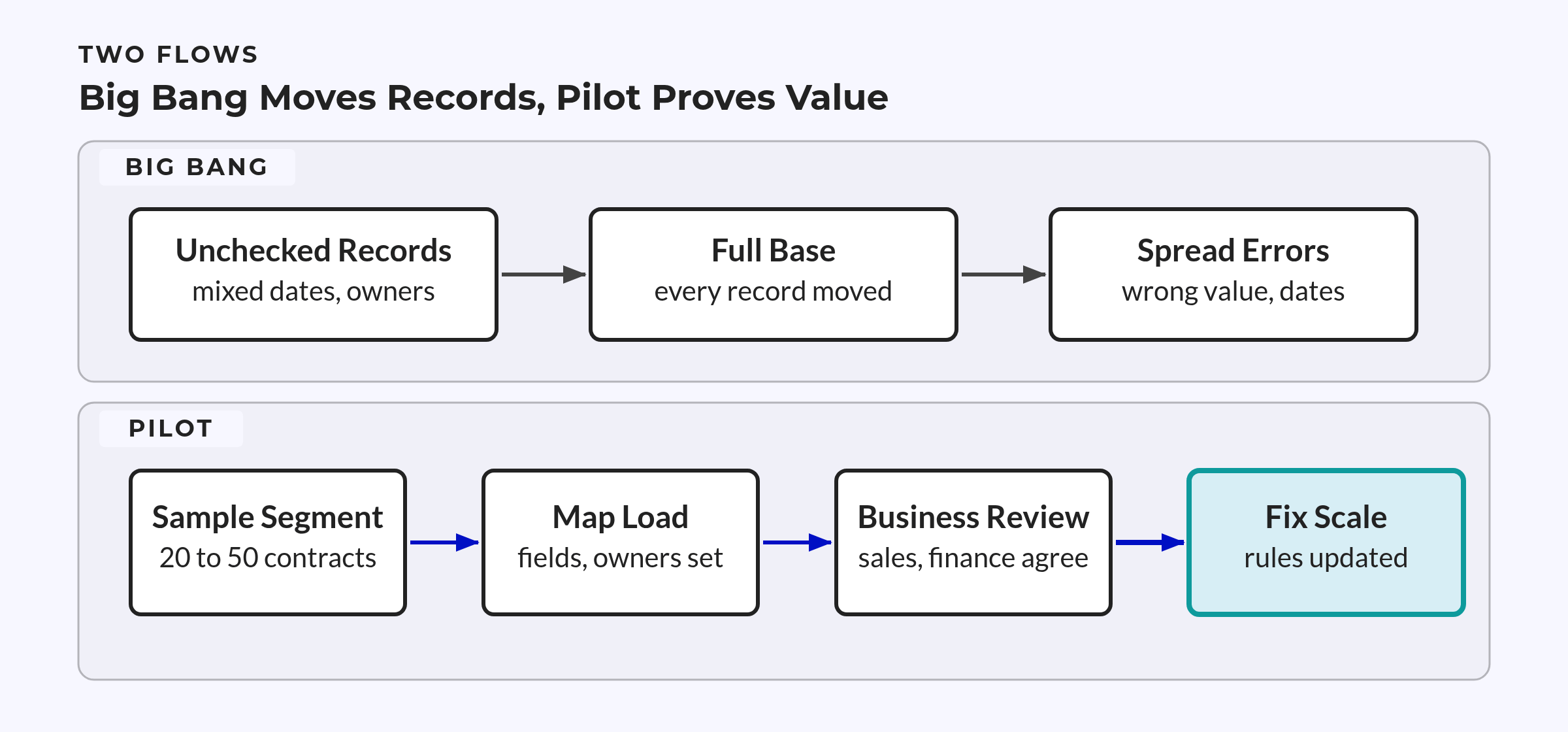
Why Big Bang HubSpot Migration Hides Contract Errors
Sales confirms what customers bought, finance approves the value rules, and customer success accepts the handoff. ERP and invoicing keep control of billing while HubSpot becomes the working revenue view.
A big bang move can copy every record but lose what those records mean. Matching totals can hide wrong term dates, duplicate accounts, and missing renewal owners.
Signals Your Contract Data is Not Ready to Scale
Warning signs often appear before the first import.
Pause Conditions
- Contract dates differ across systems.
- Term start or end dates are missing.
- No named person owns the renewal.
- A value field combines recurring fees with one-off charges.
- Stage changes overwrite historical close dates.
- Currency values lack agreed exchange-rate rules.
- Duplicate companies lack stable source identifiers.
Pause the full move if two or more flags appear. Treat that rule as a planning trigger, not an industry benchmark.
Pressure to bring tools together can push teams past these gaps. Moving more records won’t settle which date, value, or owner is right.
📊 Fact
In Salesforce’s 2026 research, 84% of sales teams without an all-in-one platform planned to consolidate their technology.
That figure describes intent among a defined group, not demand for HubSpot specifically.
What Prove the Revenue View Means in Practice
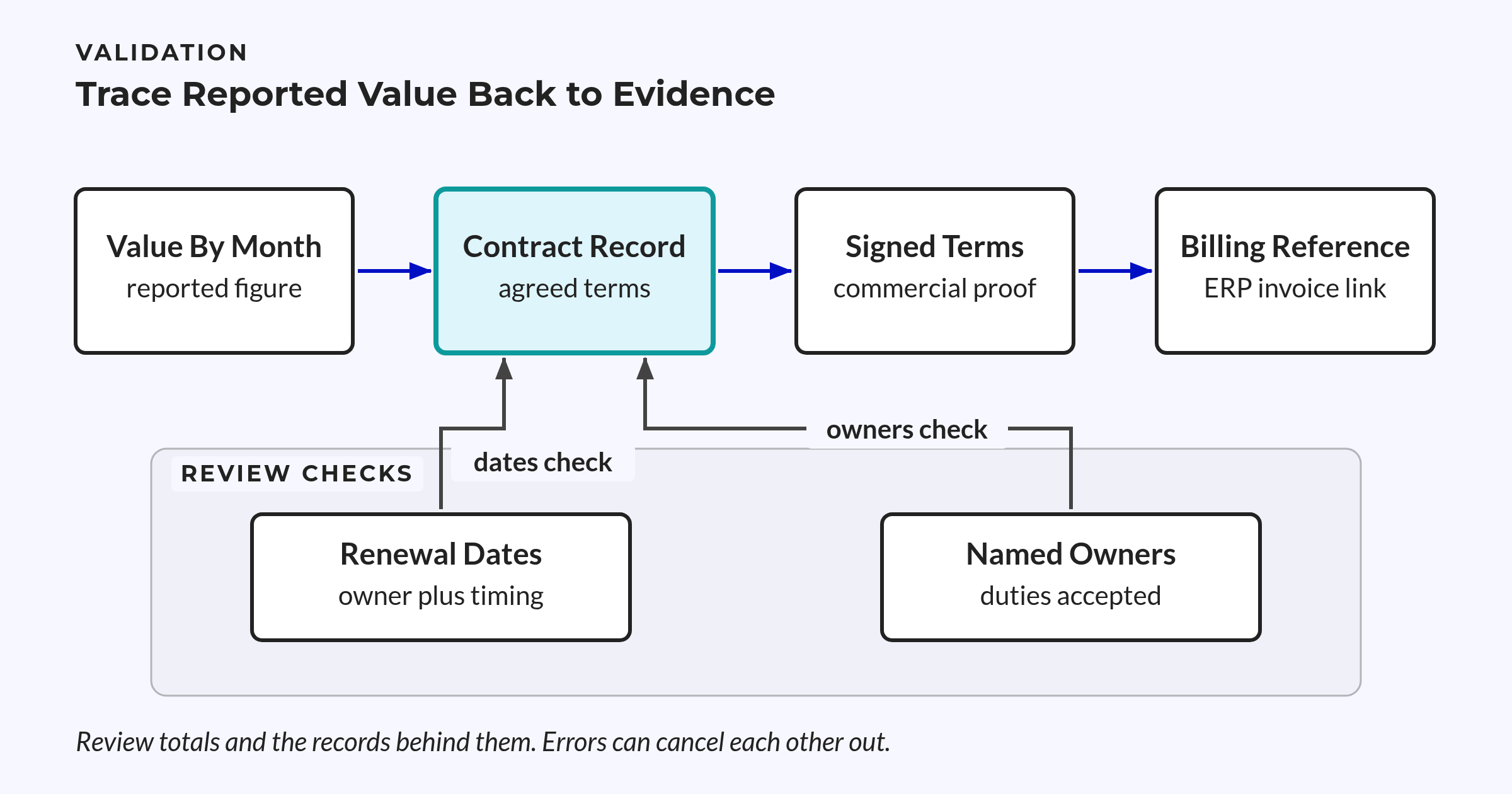
Sales and finance should be able to trace a reported value to the same customer, Contract, dates, and rules.
Evidence Of A Working Model
- Recurring value matches the agreed commercial terms.
- Term dates and renewal dates serve clear, separate purposes.
- Account and renewal owners know their duties.
- Customer success receives context it can use.
- Billing differences have clear, recorded explanations.
A closed-won Deal records a sale. On its own, it doesn’t explain every duty that follows. The pilot must link that booking to the ongoing commercial record.
For HubSpot data migration, matching files is only part of the test. Teams also need to agree on what the imported records mean.
How to Choose One Representative Pilot Segment
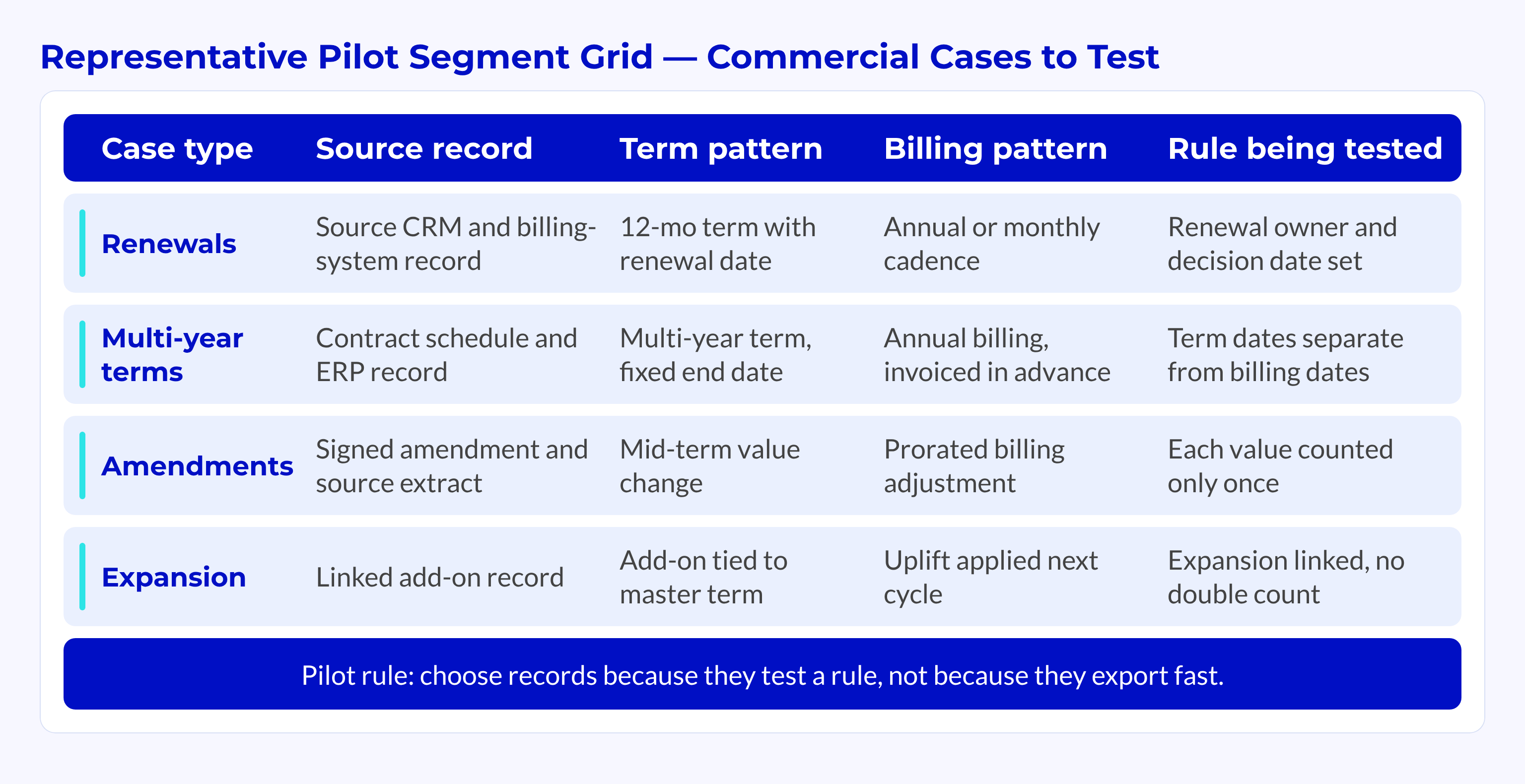
Keep the pilot narrow in scope but varied in terms. Clean, simple accounts test the easiest path and leave harder rules unchecked.
Criteria for a Segment That Tests the Contract Model
Select 20–50 Contracts from a clear customer segment. This is a working pilot scope, not a product limit.
For a UK B2B SaaS or services firm, keep the market or service line consistent. Within that group, include the contract cases that challenge your model.
Coverage To Include
- Term variations:
- Renewals approaching their decision date.
- Multi-year commitments with distinct billing schedules.
- Commercial changes:
- Amendments that change value during a term.
- Expansion linked to an existing customer agreement.
Choose records because they test a rule, not because someone can export them quickly.
Keep unusual cases visible without letting every past exception expand the build. Forrester’s CRM analysis warns that excess complexity can erode value. Preserve the detail needed to explain a Contract without copying every legacy field.
Data You Need Before You Move Records
Build a source pack that reviewers can use without searching through personal files. Give each field an agreed source and name someone to resolve conflicts.
The Source Pack
- Commercial evidence:
- Signed terms and amendments.
- Legacy CRM exports and contract schedules.
- Field rules:
- Named owners for value and date decisions.
- Definitions for recurring fees, renewal timing, and billing cadence.
- Identity controls:
- Stable source IDs and dedupe keys.
- A crosswalk linking source records to destination records.
Freeze the pilot extracts during loading. Live billing can continue, but log later source changes separately.
Without that log, reviewers can’t tell whether a mismatch came from the mapping or a newer source edit. Settle this before reviewing the CRM migration pilot reports.
How to MAP the Contract Record Before You Move Data
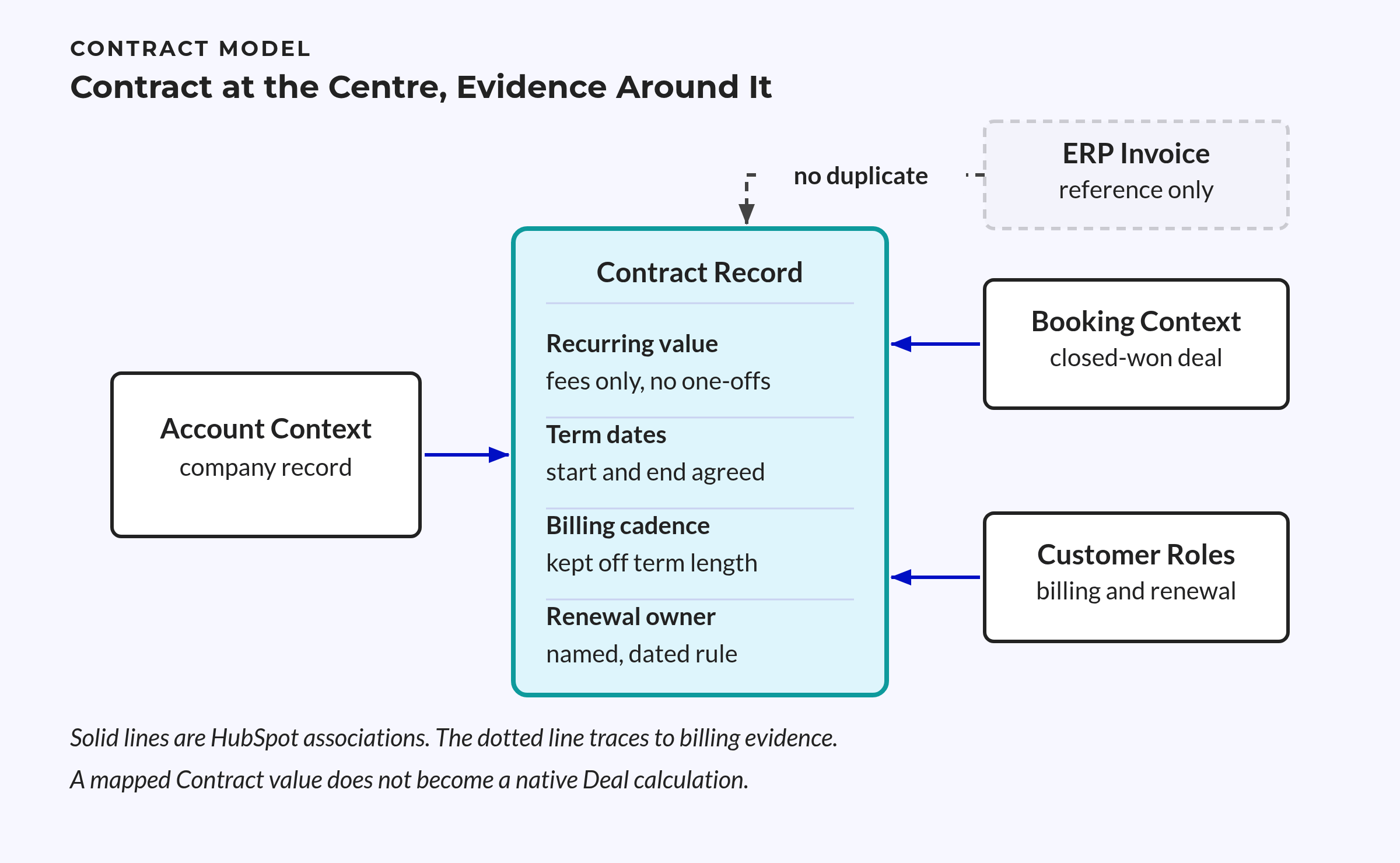
Map the commercial record before setting up fields or workflows. Each field needs a purpose: answering a revenue question, supporting an owner’s task, or linking required records.
Core Contract Fields for Recurring Value and Timing
Use the Contract record to hold the agreed commercial terms under clear rules. Don’t assume a closed-won Deal already meets that need.
The HubSpot model needs to link recurring value with customer terms, dates, and owners. The pilot tests whether those links support the work teams need to do.
Minimum Useful Field Map
| Field | Meaning To Agree | Pilot Test |
|---|---|---|
| Source Contract ID | Stable reference to the original agreement | Match the source without creating duplicates |
| Term start | Date the agreed term begins | Compare with signed terms |
| Term end | Date the agreed term ends | Check amendments and extensions |
| Contracted recurring value | Recurring fees under the agreed value basis | Exclude one-off charges |
| Billing cadence | Frequency of billing | Keep separate from term length |
| Renewal date | Date used for the renewal process | Confirm its rule and owner |
| ERP invoice reference | Link back to billing evidence | Use for tracing, not billing logic |
Define the time basis for recurring value. Annual and monthly values can’t share a field meaning because both describe recurring fees.
HubSpot’s deal property definitions distinguish Amount from annual recurring revenue, monthly recurring revenue, and total contract value. Recurring line items and their terms drive those revenue measures.
Your mapped Contract value doesn’t automatically become a native Deal calculation.
💡 Insight
An imported amount can be correct while the revenue report is wrong if each uses a different value basis.
How Ownership and Customer Context Fit the Model
Link the Contract to its Company, booking Deal, and relevant Contacts. Keep staff ownership separate from customer contact roles.
Roles To Map
- Internal responsibility:
- Account owner for the customer relationship.
- Renewal owner for the commercial decision.
- Customer context:
- Billing contact for finance questions.
- Relevant customer contacts for renewal discussions.
- Customer success handoff:
- Accepted scope and customer commitments.
- Open issues that affect delivery or renewal.
Add fields when the pilot exposes a clear need, rather than for every possible future use.
For amendments, agree whether a change updates existing terms or creates a linked record. The rule must stop overlapping records from counting the same recurring value twice.
How to Run the Pilot Migration Sequence in HubSpot
Separate mapping, loading, and business review in the HubSpot implementation. Each batch needs checks before the next batch relies on its records.
Build, Load, and Check in Small Batches
Start the HubSpot implementation with the approved field map, source extracts, and identity crosswalk. Agree how the pilot load will affect existing records and workflows.
The Load Sequence
- Map source fields to the agreed destination model.
- Clean dates, owners, currencies, and value types.
- Test-load five records that challenge the rules.
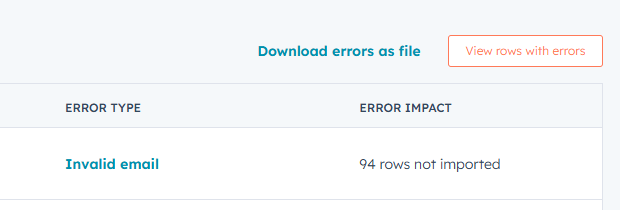
- Review import errors and record links.
- Load the remaining pilot records in small batches.
- Check reports against the source pack.
The five-record test is a proposed working step, not a HubSpot limit.
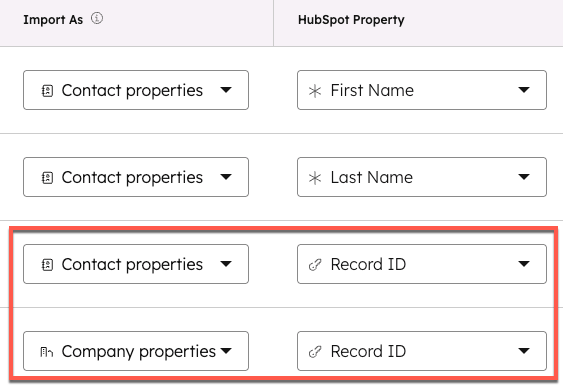
For the 2026 import workflow, check the identifiers used to update records and link them. Create required association labels before importing those relationships.
A Salesforce migration also needs clear rules for translating legacy records into the new model. Tie migration sequencing to field meaning so the export structure doesn’t dictate the destination design.
💡 Tip
Keep source IDs in the crosswalk after loading so reviewers can trace a reported figure back to its original record.
Checks Before The Next Batch
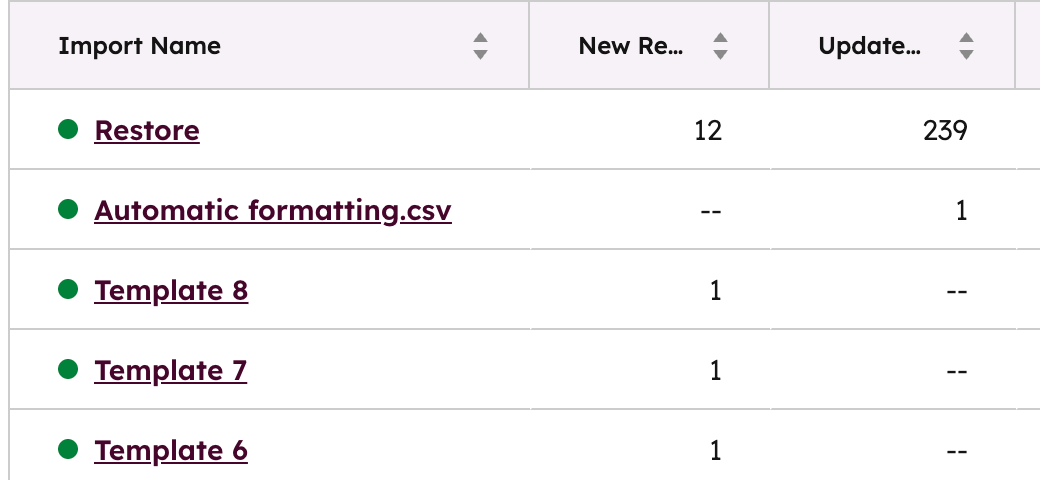
- Identity checks:
- Confirm updates reach the intended records.
- Confirm Companies, Deals, and Contacts link correctly.
- Workflow checks:
- Test whether stage changes alter close dates.
- Check owner changes and handoff actions.
- Recovery checks:
- Record what changed during the load.
- Define how to correct or repeat the batch safely.
A HubSpot export supplies data; it doesn’t prove the destination model is complete.
WordPress-to-HubSpot migration and HubSpot blog migration concern content assets. Neither tests whether teams accept the Contract revenue view.
Keep ERP and Invoicing as Source of Truth During the Pilot
Run the systems side by side with clear roles. HubSpot shows commercial terms and ownership; ERP and invoicing keep control of billing.
Reconcile weekly during the pilot. Explain differences caused by billing cadence, contract timing, or approved commercial changes. Don’t force unlike measures to match.
Dependable data and clear ownership also need to come before AI. In 2026, Gartner linked successful AI initiatives with greater investment in data and analytics foundations.
That evidence doesn’t prove a migration outcome. It supports establishing dependable data and ownership before expanding automation.
How to Validate the Revenue View with Sales and Finance
Agree on the revenue questions before designing a dashboard. Sales, finance, and customer success need to review the same pilot records and resolve differences together.
Checks That Confirm Value, Dates, and Ownership
Choose measures that fit the business model. In HubSpot’s 2025 research, 42% of surveyed sales professionals identified annual recurring revenue as their most important success metric.
That survey result doesn’t make annual recurring revenue the right measure for every pilot.
Business Review Views
- Contracted value by month, using the agreed recurring-value basis.
- Expiring terms by renewal owner.
- Records with missing or conflicting commercial fields.
- Customer success handoffs awaiting acceptance.
Review totals and the records behind them. Errors can cancel each other out and leave a grand total looking correct.
An overstated renewal and an omitted amendment, for example, can leave the overall figure unchanged. Review each commercial case from the pilot selection, not only the largest accounts.
During CS review, check the handoff for agreed scope, customer commitments, open issues, and a named next-step owner. Discuss sales enablement separately from the pilot’s handoff acceptance criteria; ask customer success to record whether the handoff meets those agreed criteria.
Keep financial reconciliation separate from attribution coverage. Imported activities alone don’t prove that historical marketing attribution works.
For reporting carried from 2025 into 2026, test required dates, contact links, and tracked interactions separately. Preserve source history where native stage timing can’t represent it.
Gate Criteria for Scaling with Confidence
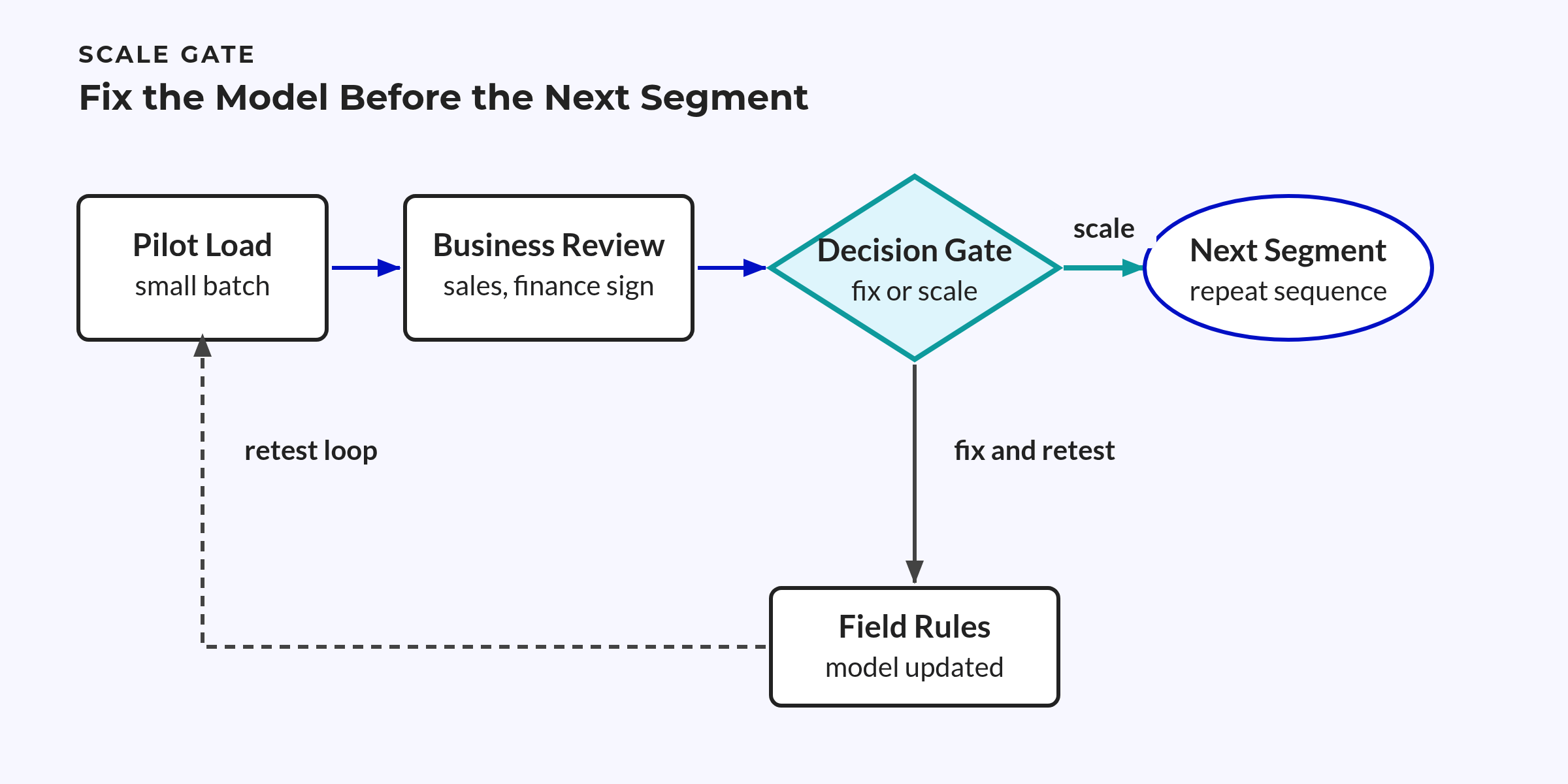
Agree the acceptable error rate before loading, not after seeing the results.
A low overall rate can still hide errors in value, timing, or ownership. Those defects need their own checks.
Scale Only When
- Record links and source IDs support reliable tracing.
- Critical value and date errors are resolved.
- Sales and customer success accept their working views.
- Finance signs off on the reconciliation.
- A named owner controls future field and workflow changes.
Log each defect with its source ID, cause, owner, and correction. Update the field rules with the fix before retesting.
Fixing only the visible record leaves the cause in place.
Once the pilot passes the gate, repeat the sequence for the next segment. Keep definitions and acceptance tests stable unless a new case needs an approved change.
Assessment finds the gaps, Backbone establishes the rules, and Run keeps them useful. A named owner must maintain those rules as terms, staff, and workflows change.
Frequently Asked Questions
Settle scope, system roles, and acceptance rules before committing to the full move. A launch date alone won’t resolve disputed values or missing owners.
How Many Contracts Should a HubSpot Migration Pilot Include?
Use 20–50 Contracts as a working scope, with enough variety to test renewals, multi-year terms, amendments, and expansion. Treat that range as a planning choice, not a HubSpot requirement.
A smaller, varied group tests more useful rules than a large set of simple records.
When is the Pilot Ready to Scale?
Scale when the pilot meets the agreed error threshold, the team closes critical defects, and finance approves the reconciliation. Sales and customer success must also accept the values, dates, ownership, and handoff context they use.
Apply the same gate to each new segment while ERP and invoicing keep control of billing.
Conclusion
A HubSpot migration pilot earns business acceptance when teams can trace and use the revenue view, not just confirm that records arrived. Agreed field rules link each Contract’s terms, value, dates, and owners to evidence.
Those rules support a phased rebuild while ERP and invoicing retain their billing roles. Feeding fixes back into the model gives later segments the benefit of what the pilot found.
Key Takeaways
- Test a narrow customer segment with varied commercial terms before moving the full customer base.
- Separate booking value, recurring value, contract timing, and billing cadence.
- Preserve source IDs and review associations before expanding each load.
- Require business acceptance and finance reconciliation before scaling.
- Strengthen the model by feeding every pilot fix back into shared rules.