
September 6, 2026
2 min read
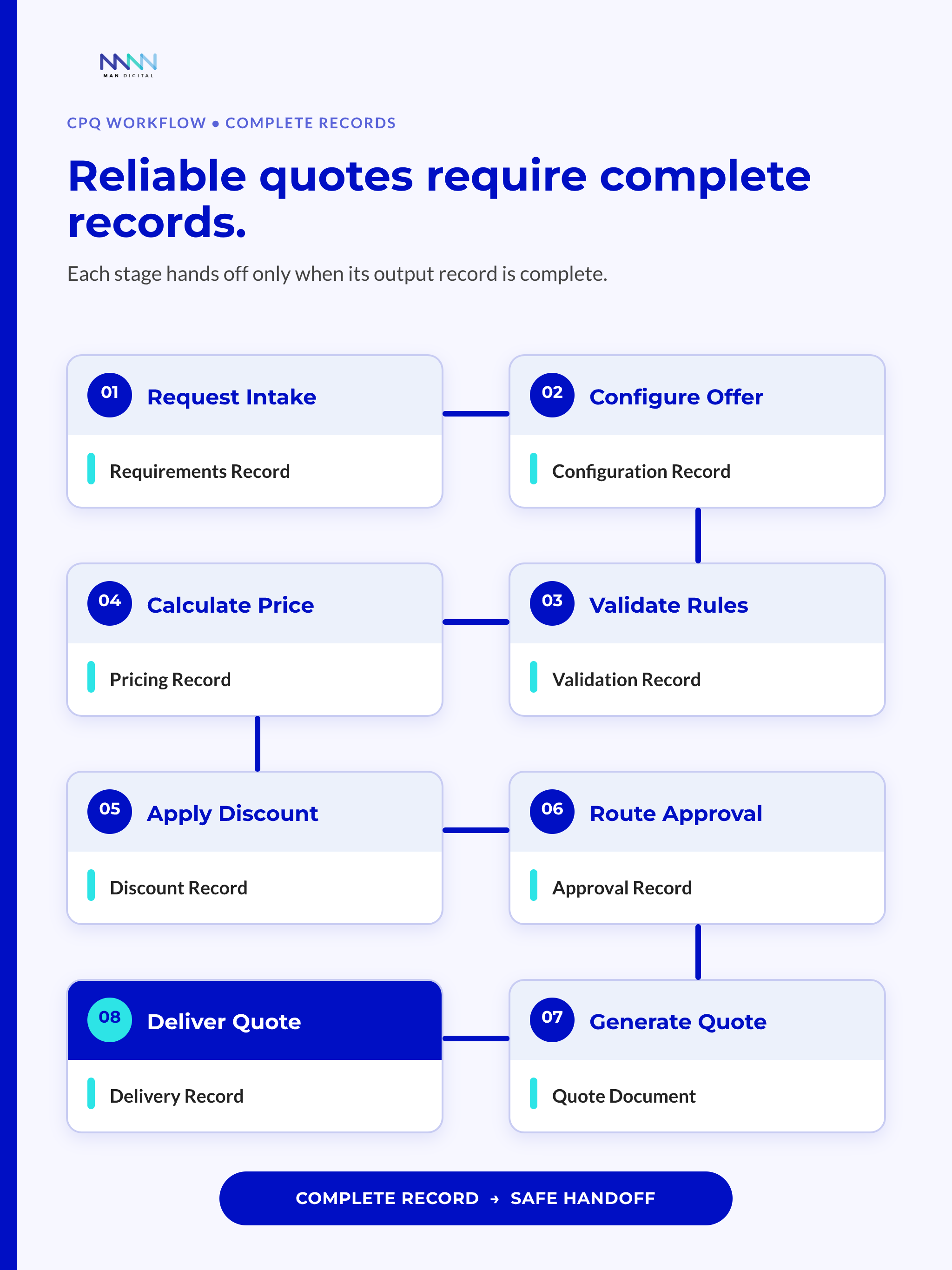
This guide covers all eight steps and the record each one must produce.
CPQ availability varies by platform and plan.
HubSpot lists its commerce products and billing terms on the revenue software pricing page.
Before designing their system, teams should confirm the current terms.
Creating the document is rarely the hard part. Deals usually stall because the rules, owners, or exit conditions are unclear. A record-based process brings those gaps into view so teams can fix them.
See the workflow in HubSpot: this product walkthrough shows how AI-powered CPQ connects quote creation, approval routing, acceptance, billing, and pipeline updates.
How the Process Creates Reliable Quotes
Every stage should produce a complete record. The next stage begins only after that record satisfies its exit condition. Teams investing in revenue operations can use this approach to spell out exactly how quotes move from one stage to the next.
The Eight-Step Sequence
The sequence covers requirement capture, configuration, pricing, approval, document generation, negotiation, acceptance, and order handoff. Documented CPQ workflows move submitted quotes through the required steps in order.
'The CPQ workflow runs in eight steps: capture the requirement, configure a valid package, calculate the price, route any exception for approval, generate the quote, negotiate, record acceptance, and hand structured line-item data to contracts and billing. Each step creates or updates a record, and the next step depends on that record being complete.'
Records Control Progress
A task can look finished even when required data is still missing. Clear records make every handoff explicit.
💡 Insight
A step is finished when its record is complete, not simply when someone marks the task done.
For a closer look at operational reporting, read our guide to building an abm dashboard.
How Configuration and Pricing Work
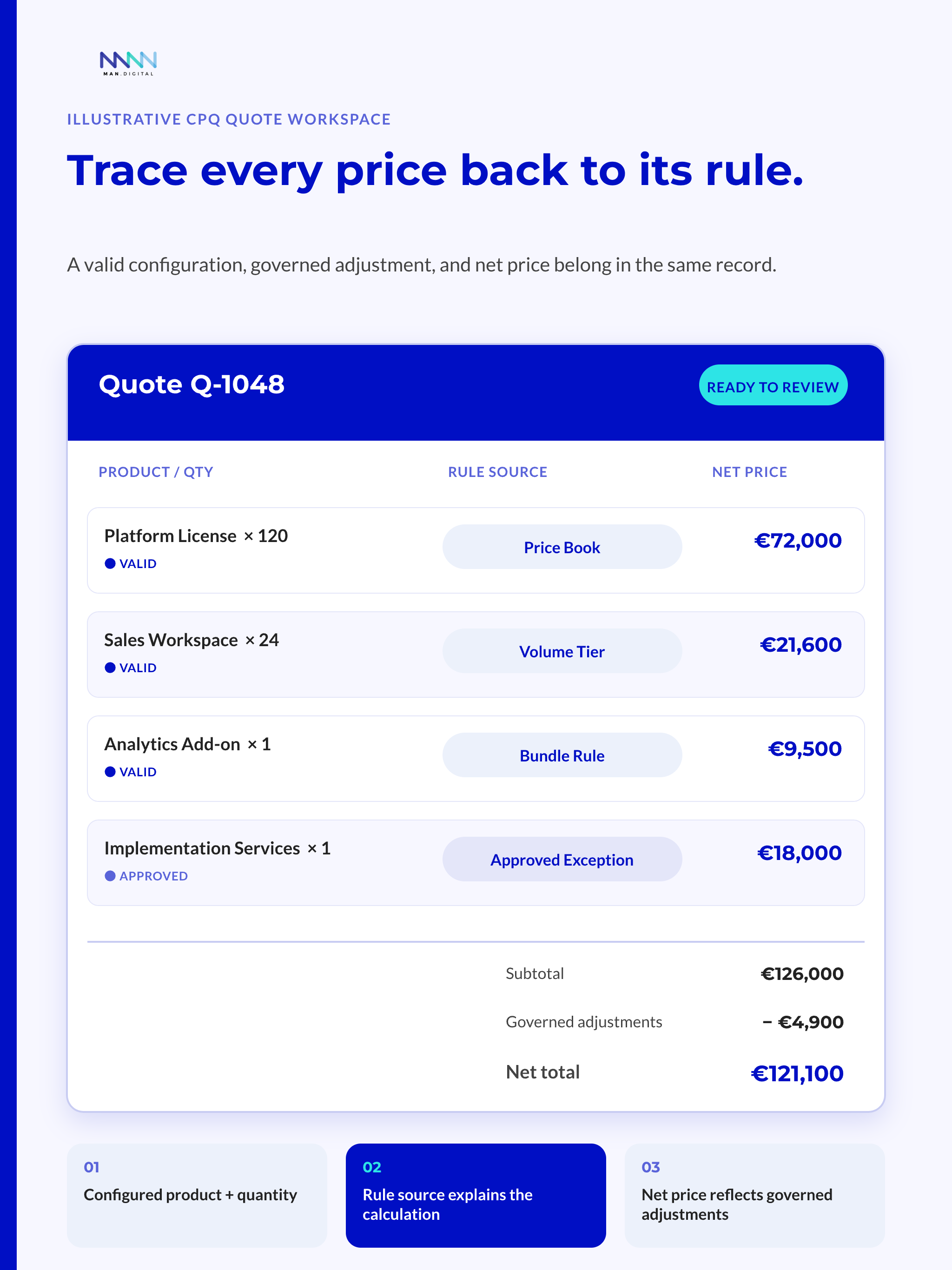
Configuration defines what the company can sell. Pricing comes next, applying controlled rules to that valid package.
Configure a Valid Package
Product rules check requirements, dependencies, and exclusions. They stop sellers from offering combinations that operations cannot deliver.
Calculate a Traceable Price
The pricing engine uses price books, discounts, terms, and customer-specific rules to calculate each price. It should also record the rule behind every amount.
| Stage | Core Decision | Output |
|---|---|---|
| Configure | Is the package valid? | Configuration record |
| Price | Is the amount traceable? | Priced quote |
| Approve | Is the exception allowed? | Approval record |
💡 Tip
Before approving a quote, verify the price and review how it was calculated.
How Approval and Acceptance Stay Controlled
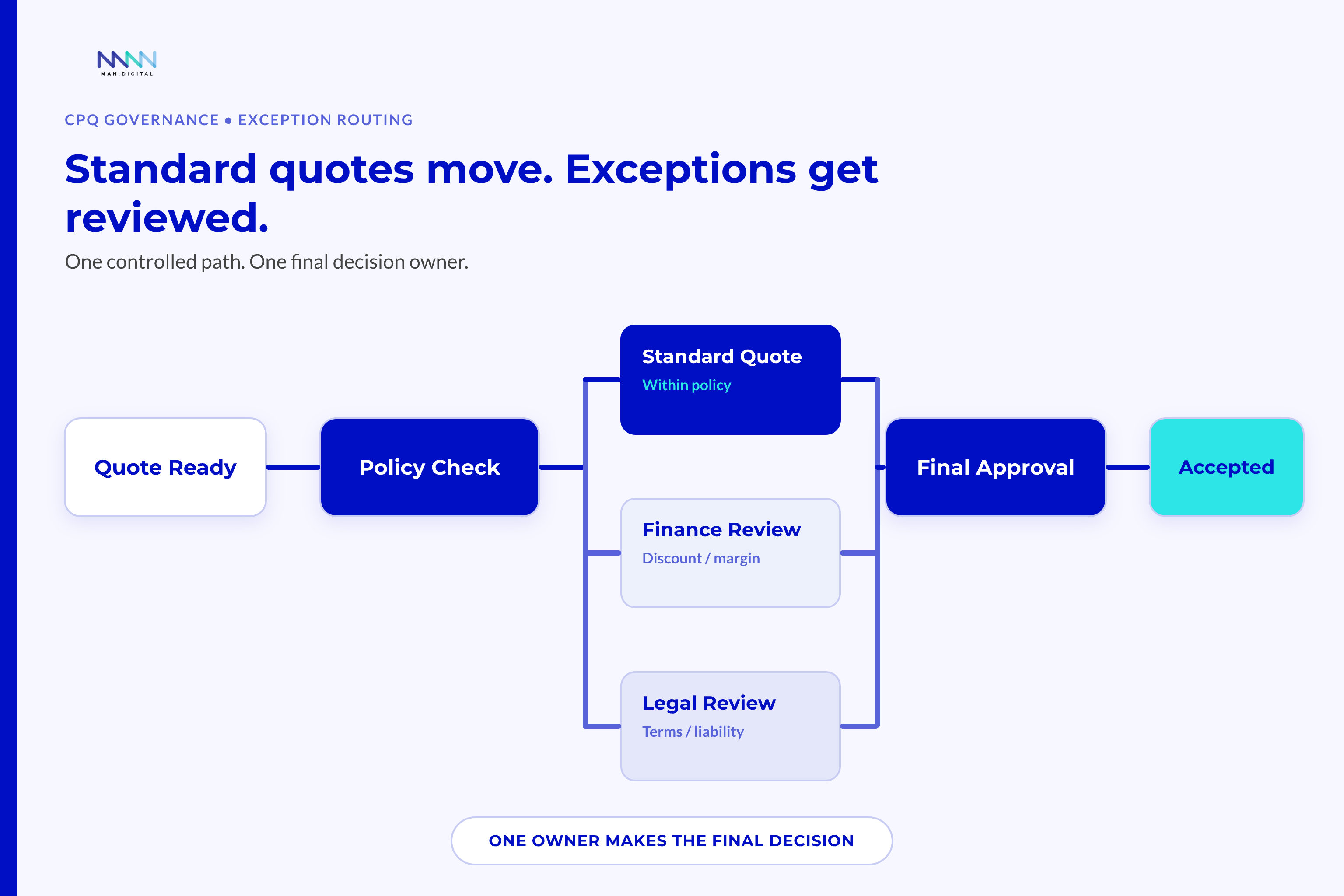
Approvals should center on material exceptions. Once accepted, the quote should enter a controlled commercial state.
Approve Commercial Exceptions
Bounded authority allows standard deals to move without unnecessary review. Clear pain discovery can also reduce late deal changes, a point reinforced by Sandler guidance.
Record Customer Acceptance
The accepted version must match the approved price and terms. A verbal agreement or pipeline stage change does not provide the same control. Teams can also guide users to the quote document page as part of a controlled generation process.
How Ownership Prevents Delays
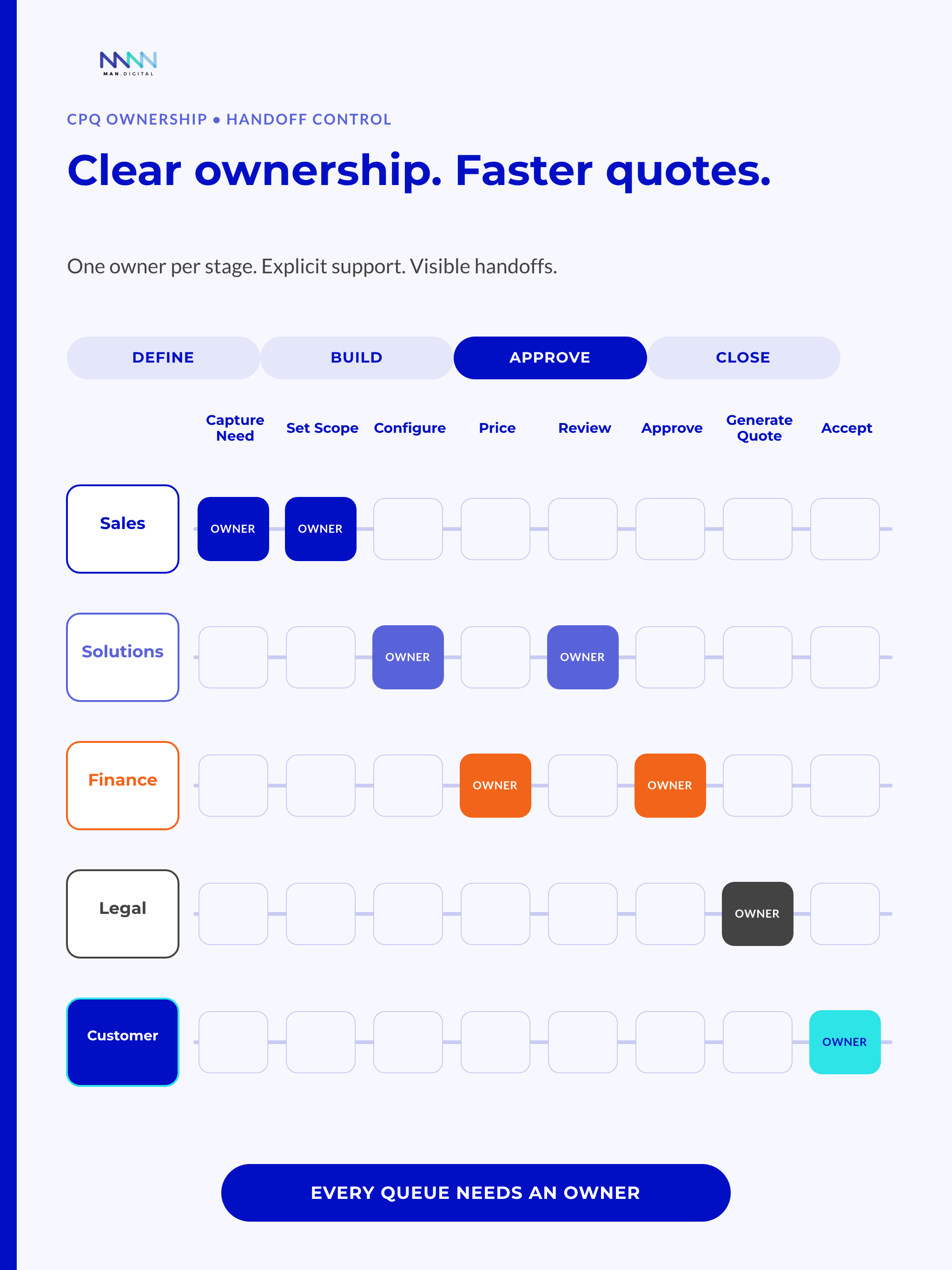
At each step, one function, and only one, should make the final decision. Other teams can weigh in, but two decision-makers usually signal an unresolved policy.
Separate Transaction and Policy Ownership
Sales owns the active transaction. Product, finance, legal, RevOps, and operations each own the policies in their respective domains.
Hand Off the Accepted Snapshot
The final interface passes along stable product IDs, quantities, dates, prices, and acceptance status. Effective workflow automation relies on this structured handoff.
📝 Note
Faster calculations will not clear delays caused by an approval queue with no owner.
Conclusion
A record-based CPQ workflow brings scattered quoting tasks together through defined stages, rules, and approvals. When configuration and governance are handled well, clear ownership leads to faster decisions, tighter commercial control, and dependable handoffs.
Key Takeaways
- Every step needs a clear entry condition, decision, record, and exit condition.
- Configuration must be complete before pricing starts.
- Approvals should concentrate on material exceptions.
- Acceptance must point to the approved version.
- Structured handoffs make order creation safer.