.svg)
.svg)
.svg)

.svg)
.svg)
.svg)
.svg)
.svg)


“Implementation of the forecast solution based on the HubSpot data has been very smooth with not only all technical aspects covered, but what is the most important with the substantive understanding of the business & finance matters which was really helpful in the collaboration.”


Unit8 is a Swiss data & AI services company that helps traditional (non-digital native) organizations transform data into value using data science, advanced analytics, and AI.
Their business runs on multi-month, project-based engagements — where sales closes deals with variable delivery timelines, and revenue recognition does not coincide with deal closing dates.
As a result, finance couldn’t reliably answer a basic question: how much revenue will we invoice this month—and next month?
We exported HubSpot deal data into Google Sheets to work around CRM reporting limits, breaking it down by billing month and joining it with invoice data.
From there, we recalculated revenue into actual, contracted, and forecasted monthly figures.
Finally, we visualized results in a BI tool and embedded them back into HubSpot, giving Sales, Finance, and leadership a clear view of revenue performance and forecasts.
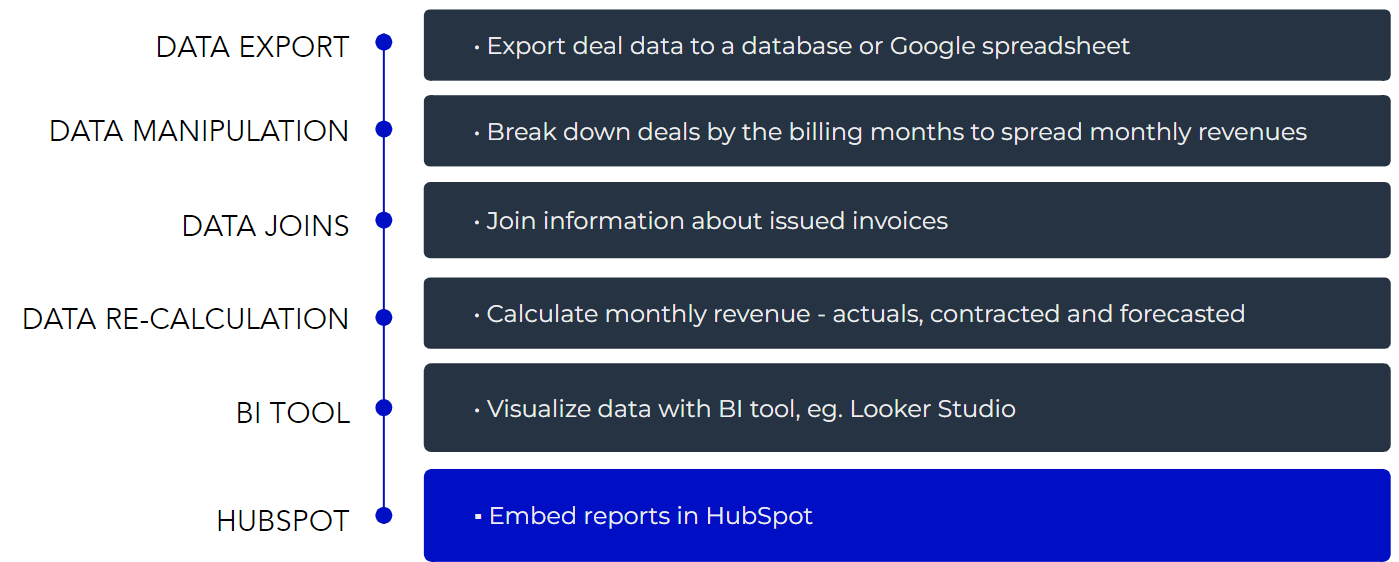
Here's the set of reports giving full project-based revenue forecasting visibility.
1) Actual revenue vs last year | YTD
Links invoiced revenue to delivery timelines, not deal close dates, enabling accurate year-to-date tracking.
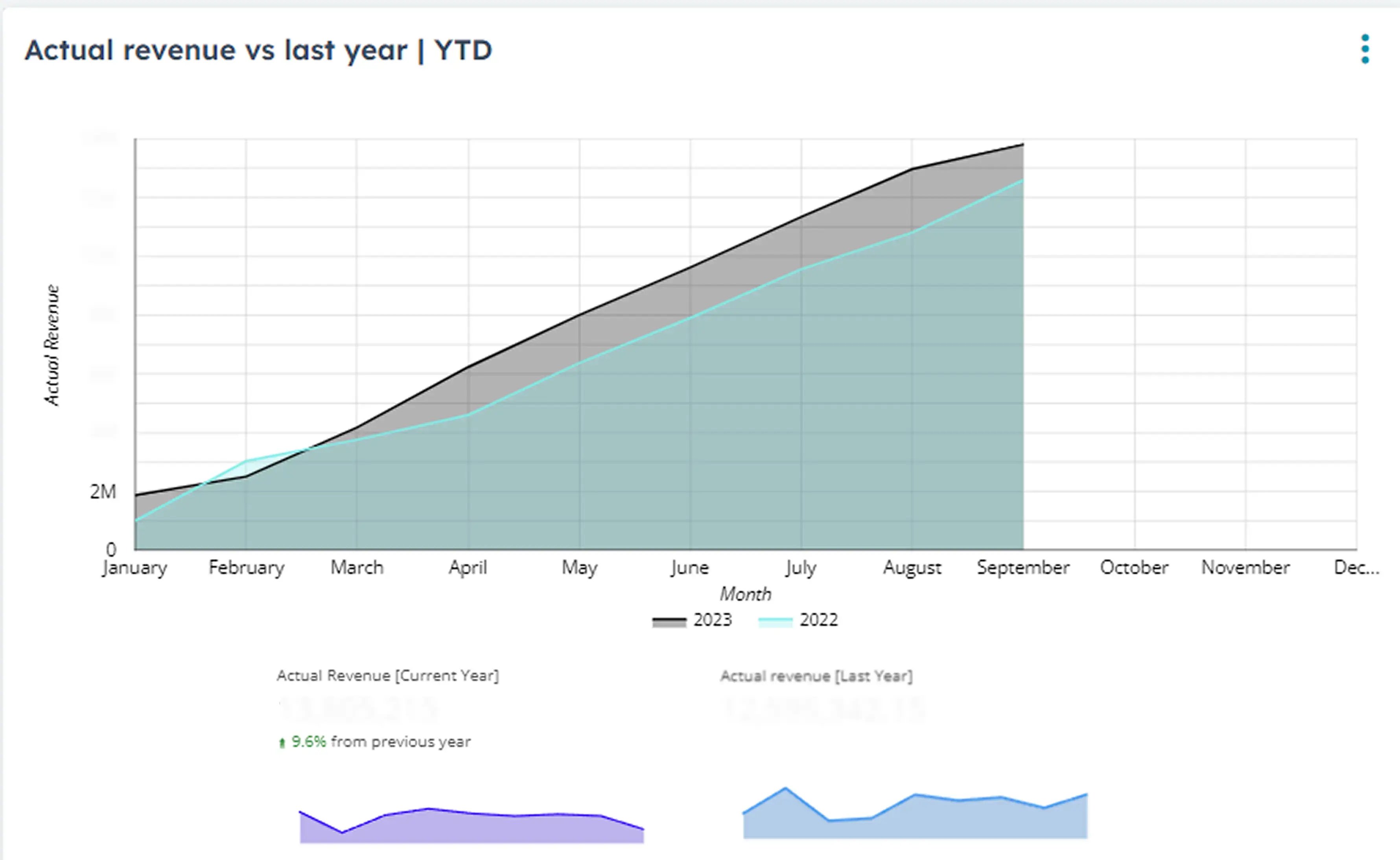
This allows teams to compare:
-
Current year invoiced revenue
-
Previous year invoiced revenue
-
True year-over-year growth based on cash-generating activity
2) Actual revenue vs target | Monthly | Current Year
Reporting that compares invoiced revenue against revenue targets for each month.
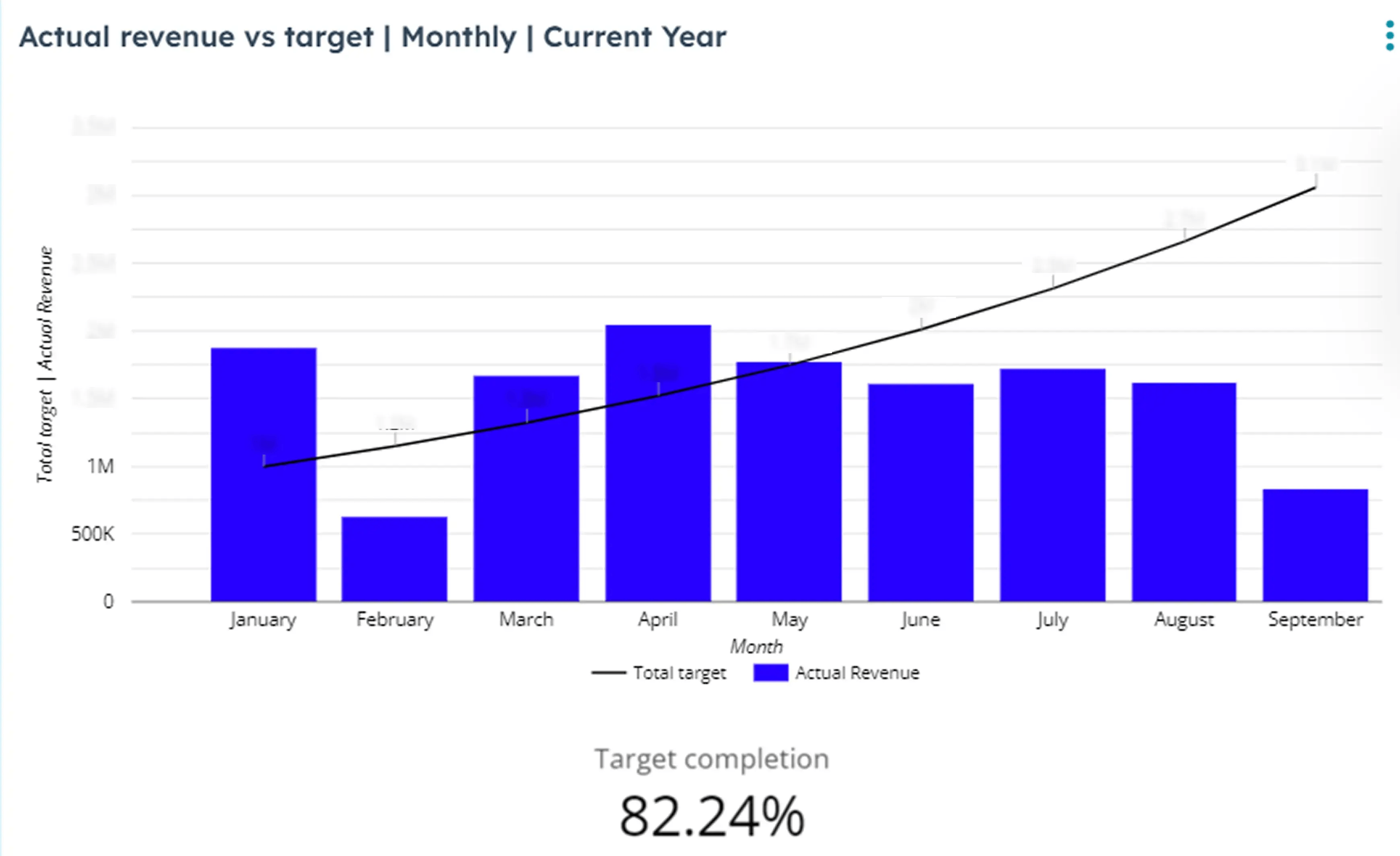
This makes it possible to:
-
See under- or over-performance as the month closes
-
Track execution against plan without waiting for quarter-end reviews
3) Actual & contracted revenue vs target | Monthly | Current Year
We mapped contracted revenue to expected invoicing months based on project phases and delivery schedules.
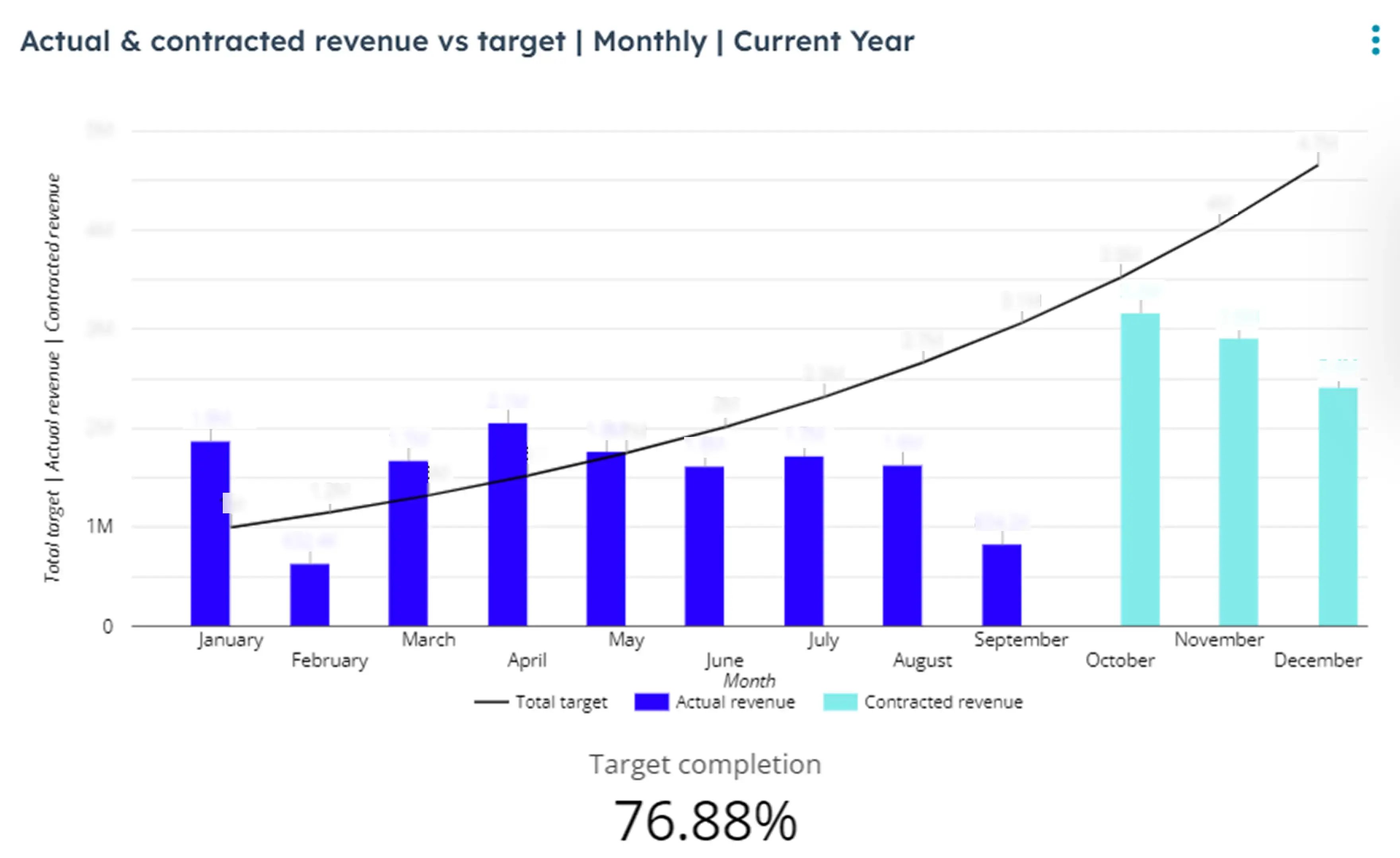
For each month, the report shows:
-
What has already been invoiced
-
What is contractually expected to be invoiced
-
How this compares to the monthly target
This enables realistic monthly planning aligned with delivery capacity and cash flow.
4) Monthly gap to target (vs actual & contracted) | Current Year
We built logic that automatically calculates the revenue gap for each month:
-
First based on actual invoiced revenue
-
Then including contracted revenue
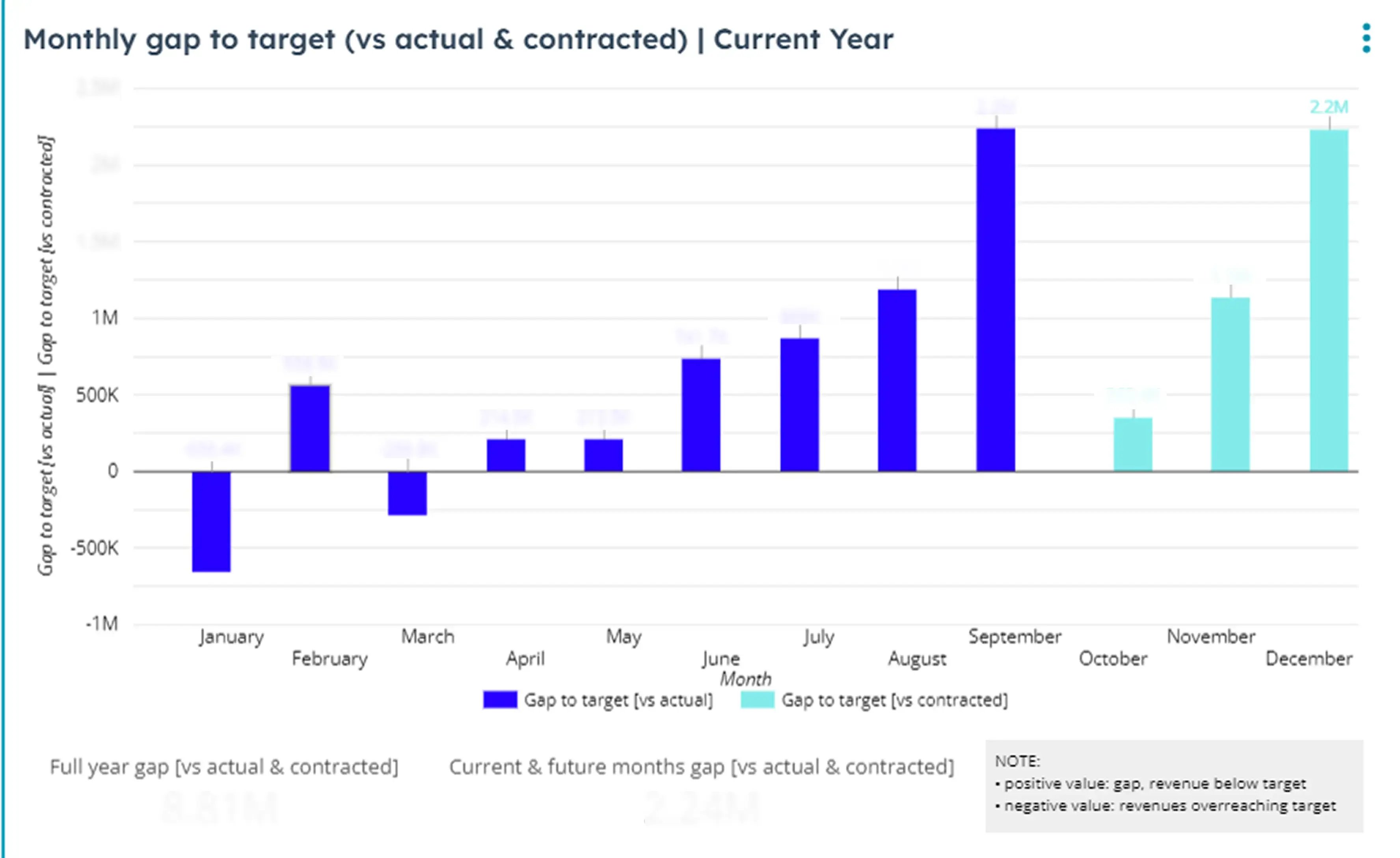
This highlights:
-
Where additional pipeline is required
-
Which months are already covered by existing contracts
Sales leadership can focus efforts precisely where the shortfall exists.
5) Forecasted weighted revenue by stage | Monthly
We implemented stage-based weighting for open opportunities to forecast future revenue by month.
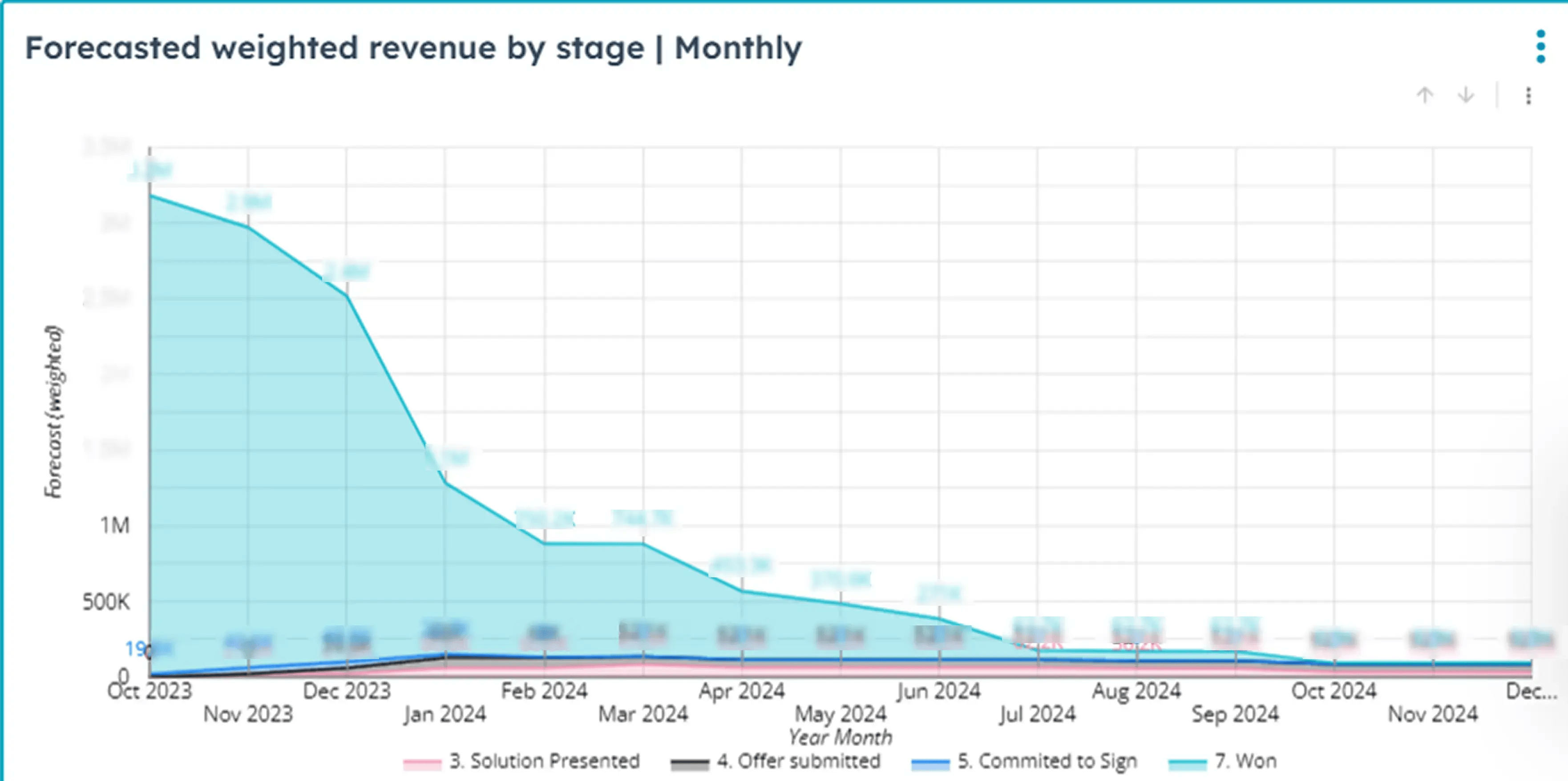
This report shows:
-
Expected revenue contribution from each pipeline stage
-
How open deals impact future months
-
Whether current pipeline is sufficient to close remaining gaps
Business Impact


“Implementation of the forecast solution based on the HubSpot data has been very smooth with not only all technical aspects covered, but what is the most important with the substantive understanding of the business & finance matters which was really helpful in the collaboration.”
Sabina Serafin
Finance Director at Unit8

CONSULTANT INSIGHT
“By tying revenue to delivery phases and real invoices, instead of deal close dates, we gave the Unit8 investor-grade forecasts and finally aligned Sales, Finance, and Delivery around the same financial reality.”
Jakub Pasik
Head of RevOps at MAN Digital
Trusted by


.png?width=127&height=24&name=image%2047%20(1).png)