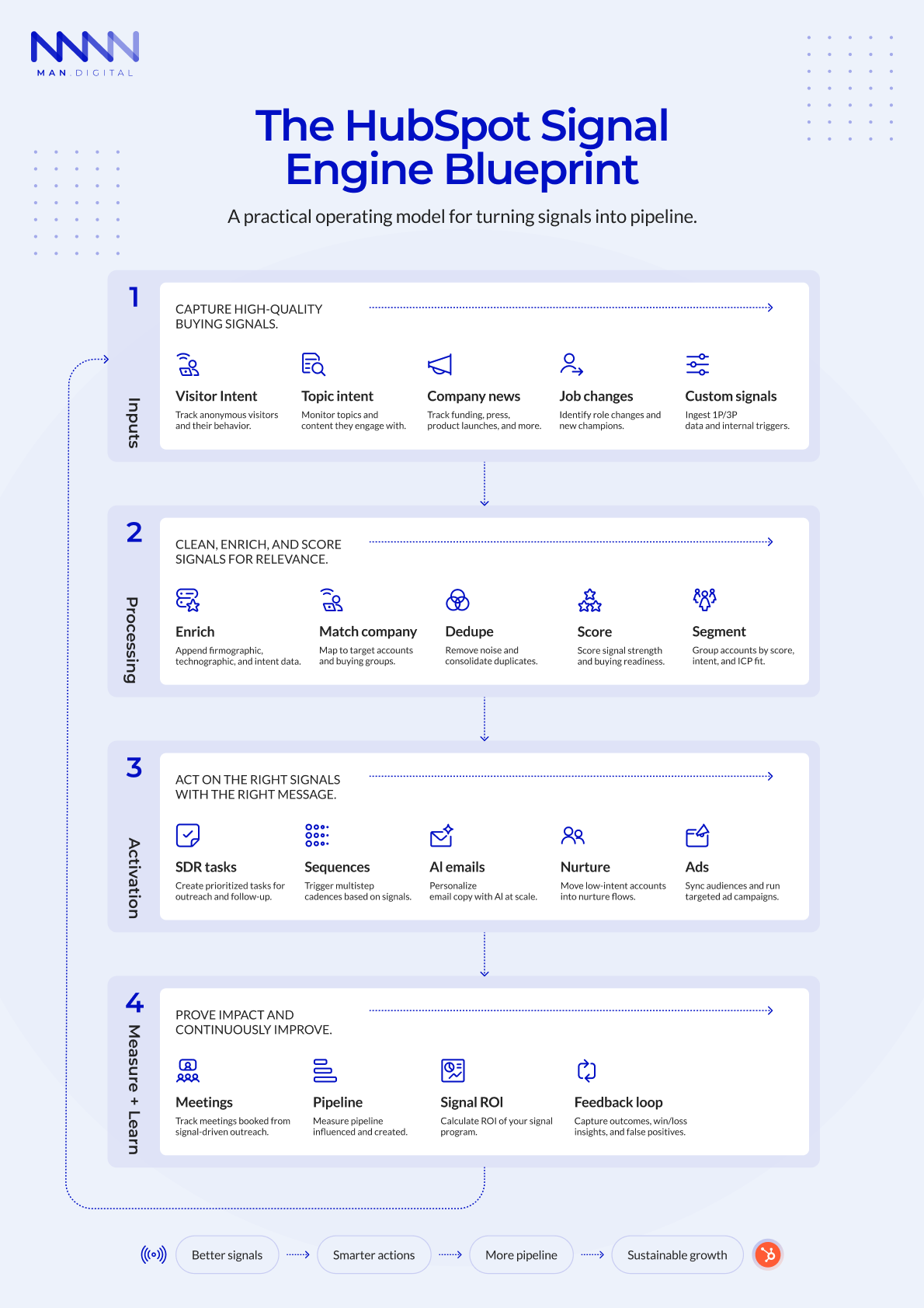
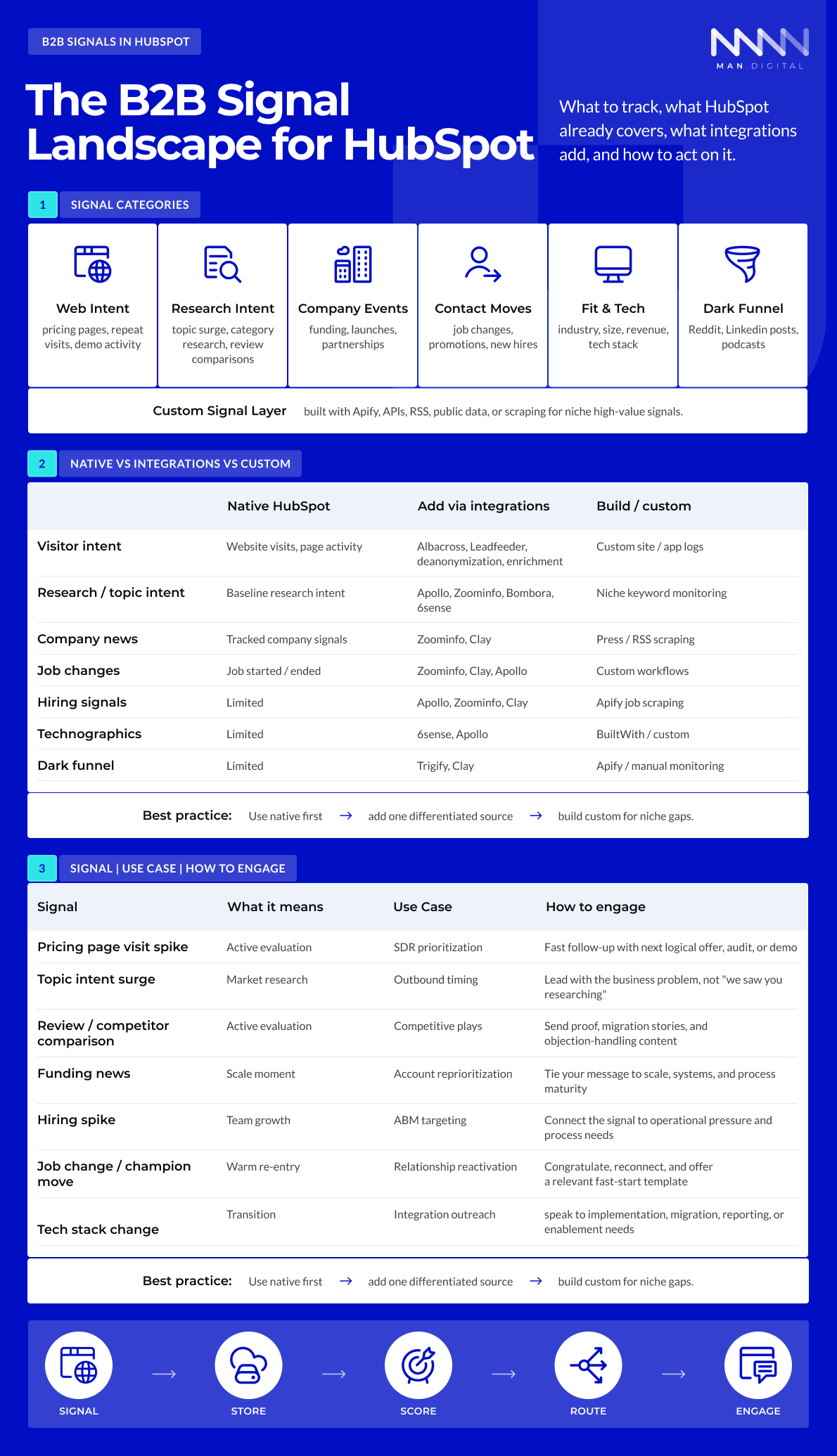
The value is simple: Find the operational gaps that keep teams busy but not aligned.
Misalignment usually hides inside normal work, not broken tools.
Sales follows one lifecycle definition, marketing reports another, and customer success sees churn risk too late.
That gap matters because 81% of sales teams are investing in AI, yet weak CRM foundations still limit what automation can fix.
Most scaleups do not need another dashboard first. They need a diagnosis that shows which processes, data, and ownership gaps create the wrong signals. Once the cause is clear, HubSpot can become a shared operating system instead of a crowded record store.
In HubSpot is often the first place where misaligned revenue operations become visible. It connects marketing, sales, service, automation, and reporting in one system. That makes it useful for diagnosis, but only when leaders inspect the right layers.
RevOps misalignment often looks like poor execution. Teams investing in revenue operations see measurable gains when they treat alignment as an operating issue.
Sales says lead quality dropped.
Marketing says sales do not follow up.
Customer success says renewal risk appears too late.
Leadership sees missed forecasts and asks for cleaner dashboards.
The real issue sits deeper.
Common warning signs:
These symptoms create a blame cycle.
Each team sees its own version of the truth, so each team fixes only its own surface problem.
💡 Insight
In HubSpot, misalignment rarely starts with reporting. Reporting shows the downstream effect of unclear definitions, weak ownership, and broken handoffs.
HubSpot reflects how your GTM teams work. When the process is clear, the platform becomes easier to manage. When the process is unclear, HubSpot records that confusion at scale.
A scaleup usually feels this shift during fast growth. One market becomes three. One pipeline becomes multiple motions. One founder-led sales process becomes a team process.
That is when the CRM stops being a simple database.
The diagnosis should check four layers:
Definitions:
Ownership:
Movement:
Truth:
If leaders skip these layers, they often patch the wrong thing. They rebuild a dashboard when the field logic is wrong. They rewrite sales stages when the real issue is lead ownership.
A useful HubSpot RevOps diagnose misaligned process starts outside the property editor. Leaders need to map how revenue should flow before checking where the portal fails. This keeps the audit from becoming a long list of unrelated fixes.
The journey map should show how a buyer becomes a customer. It should also show how the customer becomes healthy, retained, and ready for expansion.
Do not copy every HubSpot object into the map. Show the business process in plain language first.
A strong map includes:
Demand creation:
Lead qualification:
Sales execution:
Customer success:
This map creates a baseline for the HubSpot audit. Every field, workflow, and report should support one part of this flow.
For a practical first-month structure, the RevOps in HubSpot guide explains how teams can sequence alignment work without turning it into a long admin project.
A process gap means the team has not agreed on what should happen. A portal gap means HubSpot does not support an agreed-upon process. Mixing these two slows every diagnosis.
Here is a simple way to separate them:
| Misalignment Type | What It Means | HubSpot Signal | Better Fix |
|---|---|---|---|
| Process gap | Teams disagree on the rule | Conflicting stage use | Decide the rule first |
| Data gap | Required inputs are missing | Empty key fields | Add validation and ownership |
| Workflow gap | Movement does not match reality | Wrong routing or delays | Rebuild trigger logic |
| Reporting gap | Leaders see different numbers | Dashboard disputes | Standardize source metrics |
💡 Tip
When a team debates a dashboard number, ask which process decision depends on it. If no decision depends on the number, remove or downgrade it.
This split keeps the diagnosis focused. It also prevents teams from asking HubSpot to make decisions they have not yet made.
Once the process map is clear, the next step is a structured HubSpot audit. This is where the diagnosis becomes concrete. The goal is to inspect how records move, who owns them, and where handoffs lose context.
Lifecycle stages define where a contact or company sits in the revenue journey. Lead status usually defines the sales follow-up state. Many scaleups use both, but few keep the logic clean.
A good diagnosis checks whether these fields answer different questions.
Lifecycle stage should answer:
Lead status should answer:
Problems start when teams use lead status as a shadow lifecycle. They also start when lifecycle changes depend on weak actions, such as one email open.
📊 Fact
Clean routing and clear ownership are vital for scaleups because every unclear handoff pulls sales attention away from active buyer work.
The diagnosis should inspect stage movement over time. If contacts jump from subscriber to SQL without a defined trigger, the system cannot support trusted reporting.
Deal stages should reflect buyer progress, not seller activity. A demo completed does not always mean the buyer moved forward. A proposal sent does not always mean the deal deserves a strong forecast position.
This is why stage entry criteria matter.
A clean deal stage has three parts:
Buyer evidence:
Required CRM data:
Manager review trigger:
If the forecast already feels unstable, compare this audit with your HubSpot forecasting setup. Forecasting only works when stages and categories mean different things.
Automation can hide RevOps misalignment when teams add workflows before fixing data quality. Bad inputs create bad actions faster. A HubSpot RevOps diagnose misaligned audit must inspect field trust before workflow scale.
Not every field deserves equal attention. The diagnosis should focus on fields that drive routing, scoring, segmentation, forecasting, or customer risk alerts.
These fields form the operating layer of HubSpot.
High-risk fields include:
For each field, ask three questions. Who owns it? What changes it? Which workflow or report depends on it?
If no one owns the field, the field will decay.
Workflows often expose hidden alignment issues. A trigger may look logical, but it can still create noise if the data behind it is weak. Diagnosis should check both the workflow rule and the exception path.
Workflow review checklist:
Modern revenue teams keep adding automation because buyer and seller work keeps getting more complex. The useful question is not whether to automate more. It is whether the automation follows a rule that the business trusts.
📝 Note
Automation should reduce judgment work, not remove accountability. Every important workflow still needs a human owner.
The audit only creates value when it turns into a ranked action plan. Scaleups need to fix root causes without stopping daily revenue work. The best plan separates urgent fixes from structural rebuilds, then connects every fix to a measurable decision.
Do not rank issues by how annoying they feel. Rank them by the revenue decisions they affect. A broken forecast input should beat a messy dropdown field that no workflow uses.
A simple scoring model works well:
| Priority | Revenue Risk | Example | Action Window |
|---|---|---|---|
| Critical | Board, forecast, or routing impact | Close dates are unreliable | This week |
| High | Sales or marketing handoff impact | MQLs lack acceptance rules | Two weeks |
| Medium | Reporting or segment impact | Industry values are inconsistent | This month |
| Low | Admin or naming impact | Old unused fields remain | Backlog |
This keeps the plan practical.
Critical fixes often include:
Medium fixes often include:
The plan should also name owners. A fix without an owner becomes another audit finding next quarter.
A diagnosis is not complete when the audit deck is done. Leaders need proof that fixes changed team behavior and revenue visibility. The right metrics show whether HubSpot now supports better decisions.
Useful health metrics include:
These metrics do not replace revenue metrics. They explain why revenue metrics move.
The diagnosis should define a starting baseline. Then the team can compare progress after one, two, and three operating cycles.
A stronger maturity path also needs clear stages. The RevOps maturity model shows how teams can move from reactive fixes to managed revenue operations.
Decision-linked reporting should define:
This prevents dashboard sprawl. It also helps leaders see HubSpot as an operating system, not a reporting archive.
HubSpot RevOps diagnoses misaligned work and gives scaleups a clear path from confusion to control. It helps teams turn scattered data, unclear handoffs, and weak ownership into a shared revenue operating model.
When the diagnosis connects process, data, workflows, and reporting, leaders gain a system they can trust. That trust improves decisions, strengthens governance, and supports growth without adding more tool noise.
Key Takeaways